Ship Life
Your crew sleeps in shifts, cooks between watches, repairs what entropy loosens. The ship starts as transport. It becomes home through use.
After the stars went quiet.
One star · Seven worlds · No way out
SUNFARERS
A Space Life Simulator
Sunfaring; a centuries-old profession between radiator heat and station neon. Fly the lanes, trade, explore, fight, pray that your ship doesn’t whisper your name. If it does, purification rituals keep the unthinkable at bay. Build a sanctuary in space, a place of comfort in a universe that doesn’t look quite right.
What the job is
Your crew sleeps in shifts, cooks between watches, repairs what entropy loosens. The ship starts as transport. It becomes home through use.
Seven factions orbit a single star, trading energy cells and medical supplies, religious goods and contraband. The entropic drive gets you there fast. The passage leaves marks.
The Artery Stream once connected this system to thousands of others. When it fell silent, the rest stopped answering. Seven factions, one star, and silence where voices used to be.
Dead ships still carry cargo, evidence, and sometimes people. Find a trace, hold the watchline, send someone outside. What comes back belongs to the living. What happened out there does not stay private.
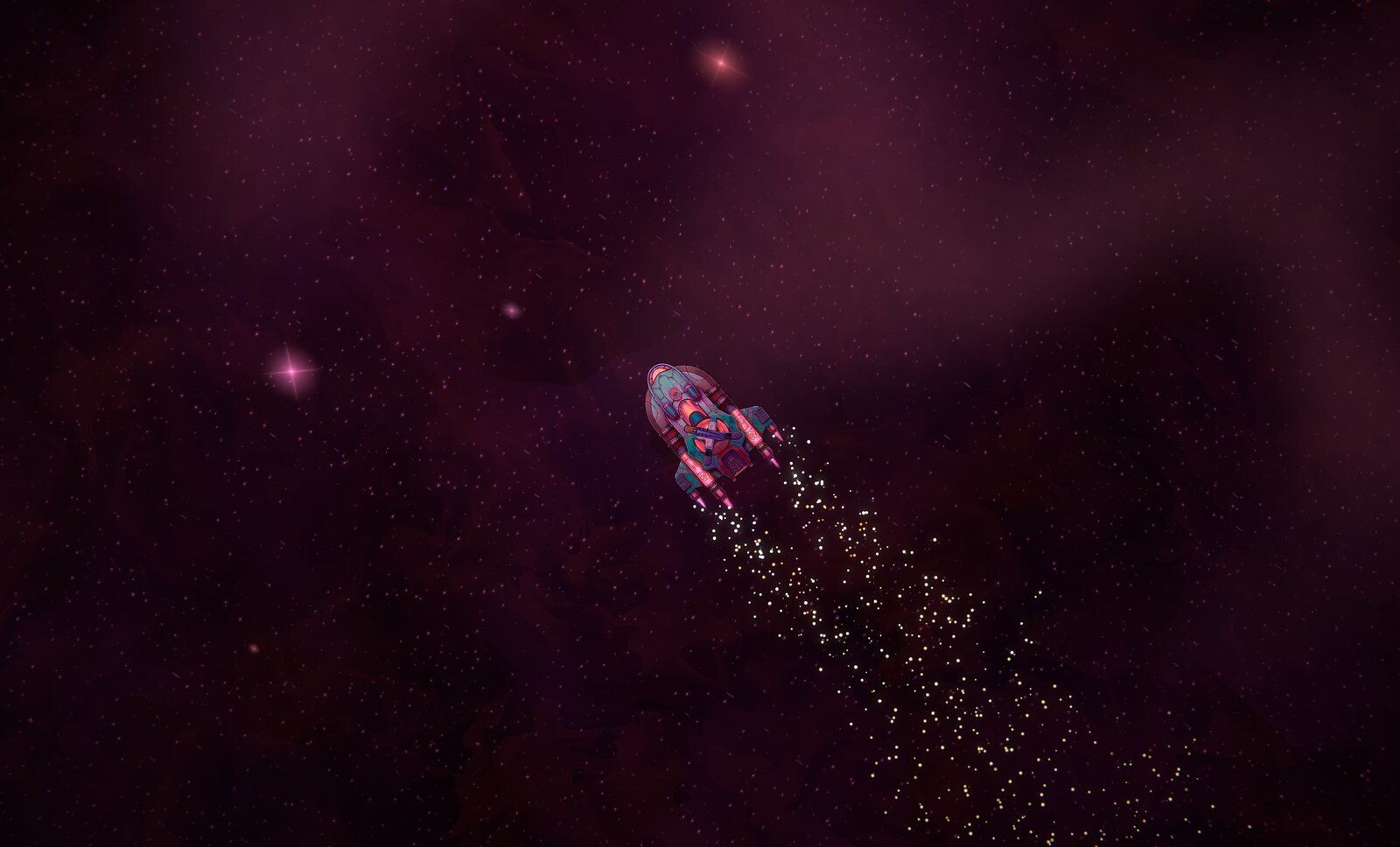
Open channel
One transmission when Sunfarers is ready to fly. Nothing else rides this frequency.
Shipboard Systems
Sunfarers live aboard. The ship carries cargo, crew, and whatever routines keep them human between ports. You walk its corridors, assign its stations, upgrade its systems. Over time, it stops being a vessel and becomes something closer to a place.
Select a compartment
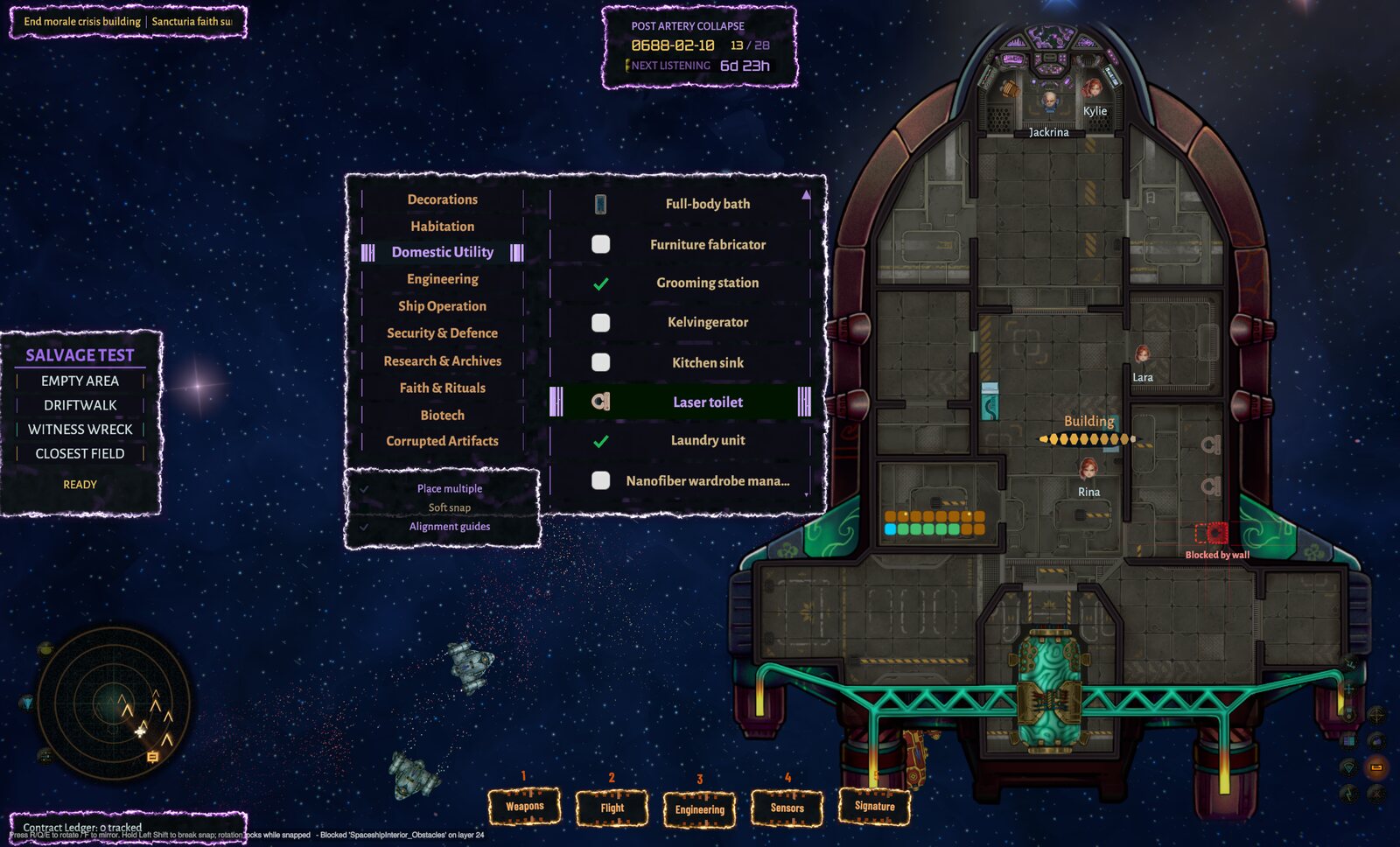
The onboard field manual opens from the HUD or with F1. Eleven chapters cover flight, docking, trade, crew, hazards, drones, the Command Deck, and the controls that bind them together. It reads live cargo capacity, market prices, standings, and current key assignments, so a complex ship never asks you to learn from stale instructions.
Flight & Astrogation
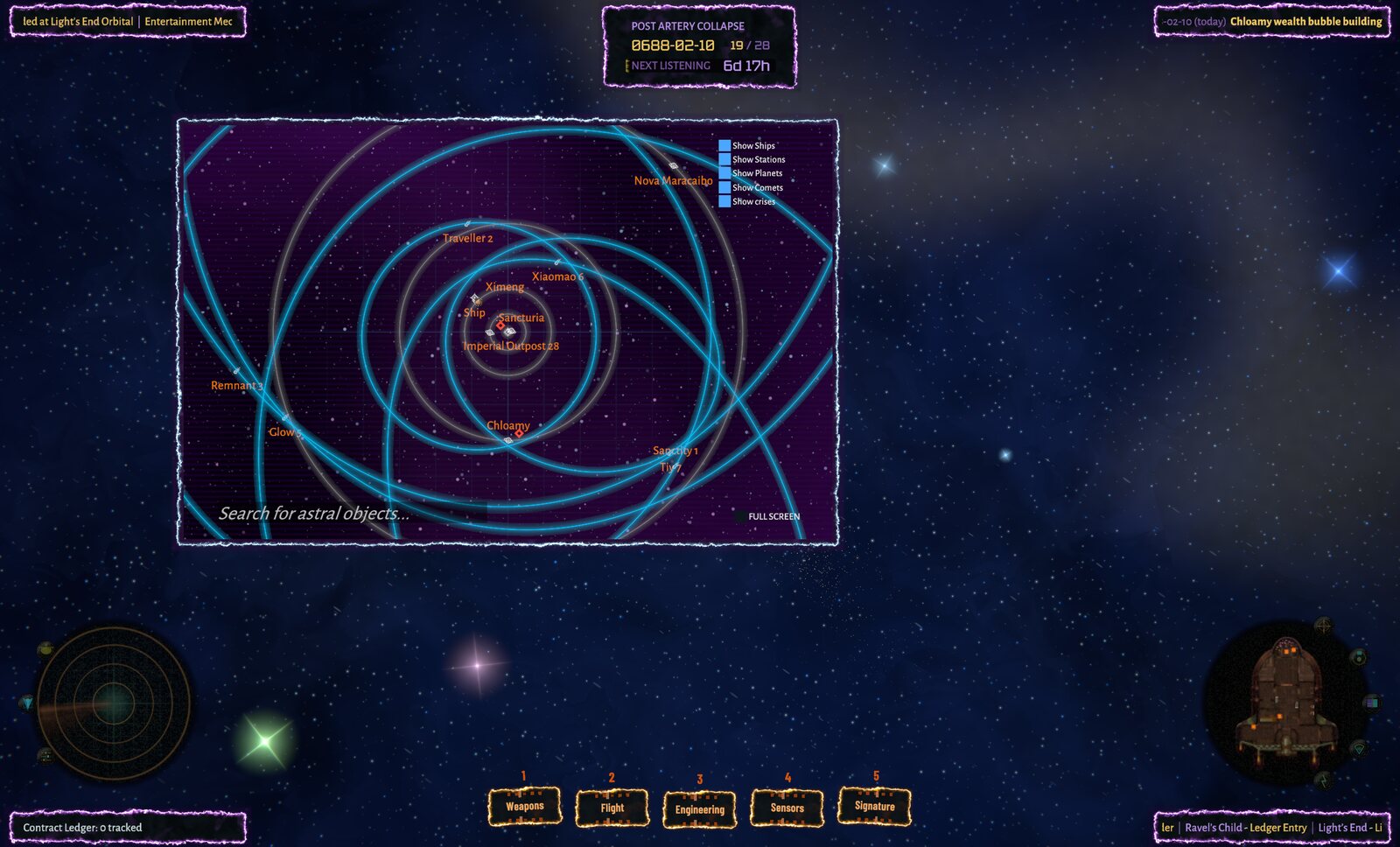
Seven worlds orbit a single star in a system bounded by silence. Between them: trade routes, patrol corridors, debris fields, and the long empty stretches where the only company is whatever your sensors think they’re picking up.
Momentum-based flight. Your ship carries its velocity: thrust forward, cut engines, drift. The nav computer plots acceleration curves, cruise phases, deceleration burns, and orbital approaches. Take manual control and that calculus is yours. The system is vast enough that patience and fuel economy matter as much as raw thrust.
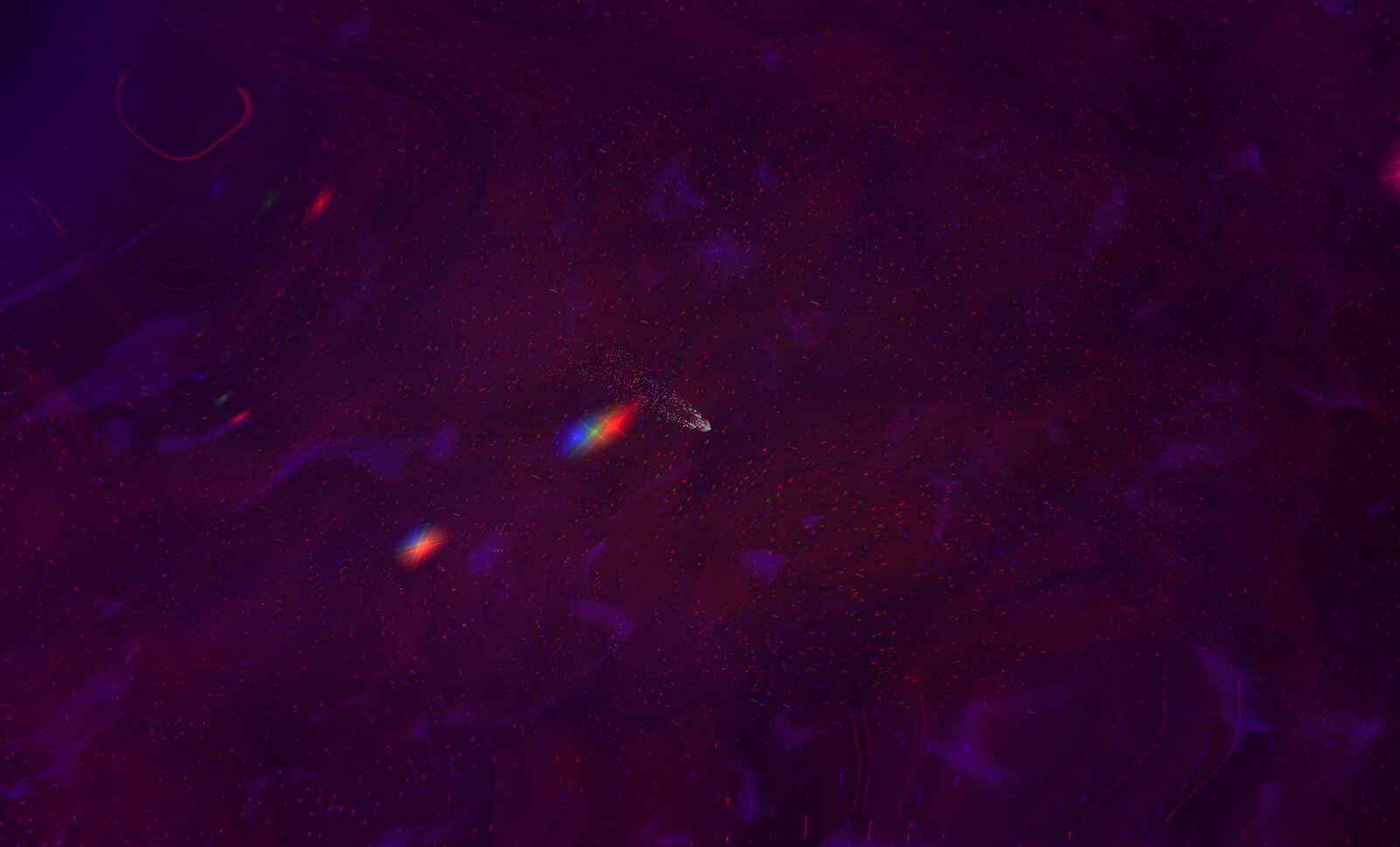
The entropic drive folds space. Weeks of travel compress into hours. But the passage leaves its residue: voices in frequencies that shouldn’t carry sound, a lingering unease that doesn’t fade immediately after arrival. Crew focus governs transit speed; a sharp, rested crew pushes through faster than an exhausted one.
Stations have limited docking bays. Approach, queue, orbit while you wait. Merchant haulers circle alongside you, some loaded with Ximeng steel, others running medical supplies to Sancturia. Sancturian purifier corvettes hold formation nearby, scanning for contraband. Privateers idle at the edge of sensor range. Civilian transports carry passengers between worlds. The system runs on traffic, and every berth has a queue.
At the system’s edge, where reality thins: instruments begin to disagree with each other. Range finders return contradictory numbers. Crew report hearing their own names spoken in almost-familiar voices. The stars ahead shine in colors that don’t correspond to any known spectrum. Ships that cross the boundary broadcast increasingly incoherent transmissions, or go silent entirely. None return. The system is finite, and the boundary is not a metaphor.
Recovery Operations
The system is full of things that never reached port. A powered deep-space scanner can find their traces. A close helm survey tells you where the recoverable sections are. Everything after that requires three people, steady hands, and a ship kept close enough to watch.
> SNOAS: Trace acknowledged. Seat a Pilot and bring the ship within survey range.
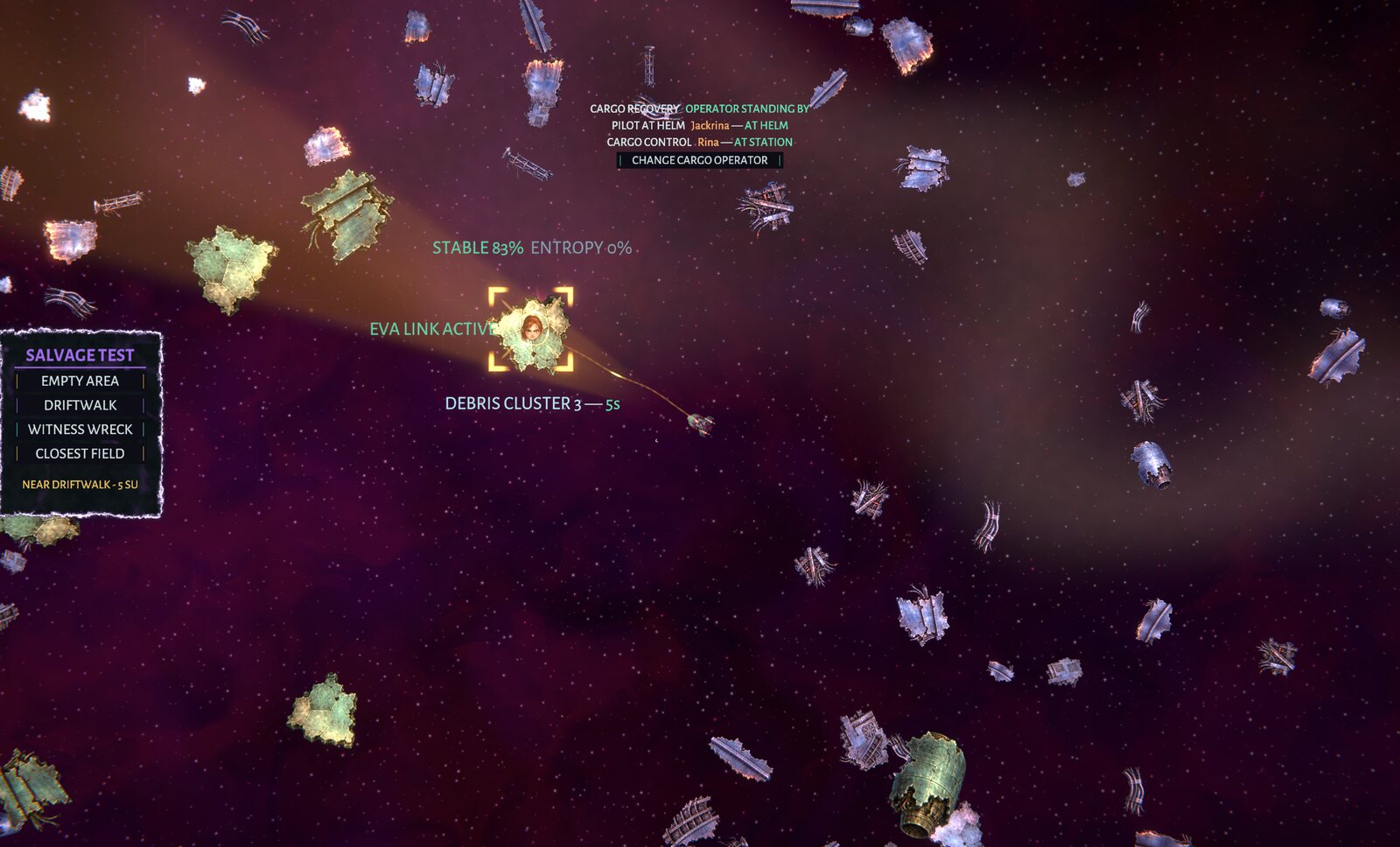
Search deep space with a powered scanner or buy a dossier from a drydock. Wreck clusters and scattered driftwalks remain uncertain until you fly close and put a Pilot on the helm scanner.
Choose a Pilot, an EVA specialist, and a Cargo operator. They leave ordinary work and assemble at their stations. The operation waits for all three; replacing one changes the human shape of the risk.
Recovered material is expelled as a physical pod, still carrying the identity of the field and section it came from. Scoop it, sell it, satisfy the contract, or lose it in the dark.
The EVA person remains part of your crew, outside the hull. The Pilot must hold manual steering, range, view cone, visibility arc, and a clear watchline while debris moves through the field. Drift too far and the tether becomes lethal. Point the main thrusters the wrong way and the exhaust plume can hurt the person you sent out.
Careful extraction is slower and gentler. Forceful work is fast and raises pressure. Thresholds launch directional debris waves that threaten crew, pods, shields, and rivals. During the Listening, the watchline tightens and controls may invert, but the impossible conditions can leave more material intact.
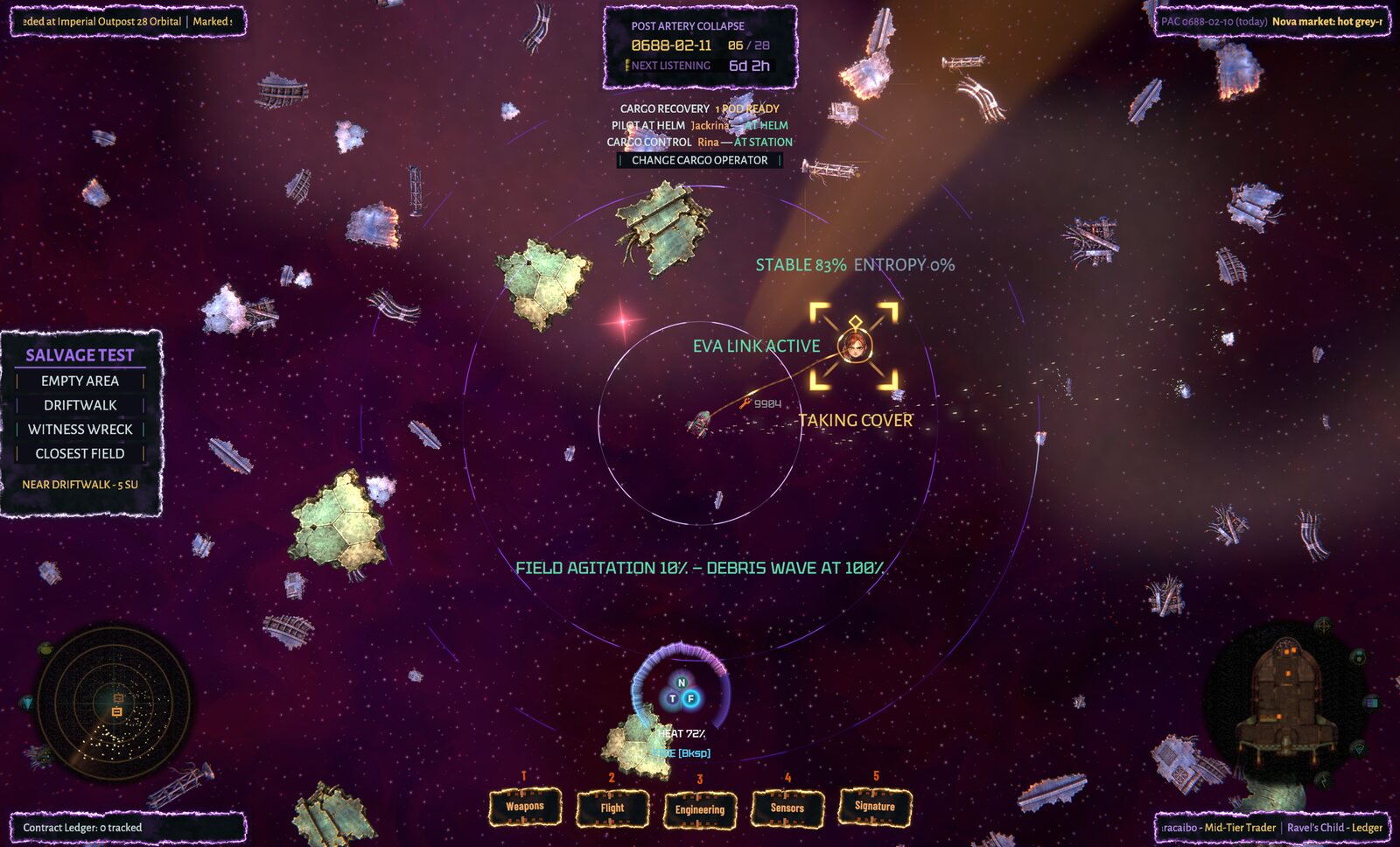
Rival salvagers arrive with their own contracts and their own idea of ownership. Some can be paid. Some steal the named cache and run. Rarely, the wreck still holds a previous salvager: recruit them, carry them home as a passenger, hand them to a rescue network, or make a choice the Chronicle will remember.
Markets & Manifests
Seven economies bound by necessity. Refined materials from Ximeng, religious goods from Sancturia, prototype components from IO-28, luxury goods from Chloamy. Twenty commodities circulate through the system, each with a supply chain, a faction that controls it, and a price that shifts with the system’s mood.
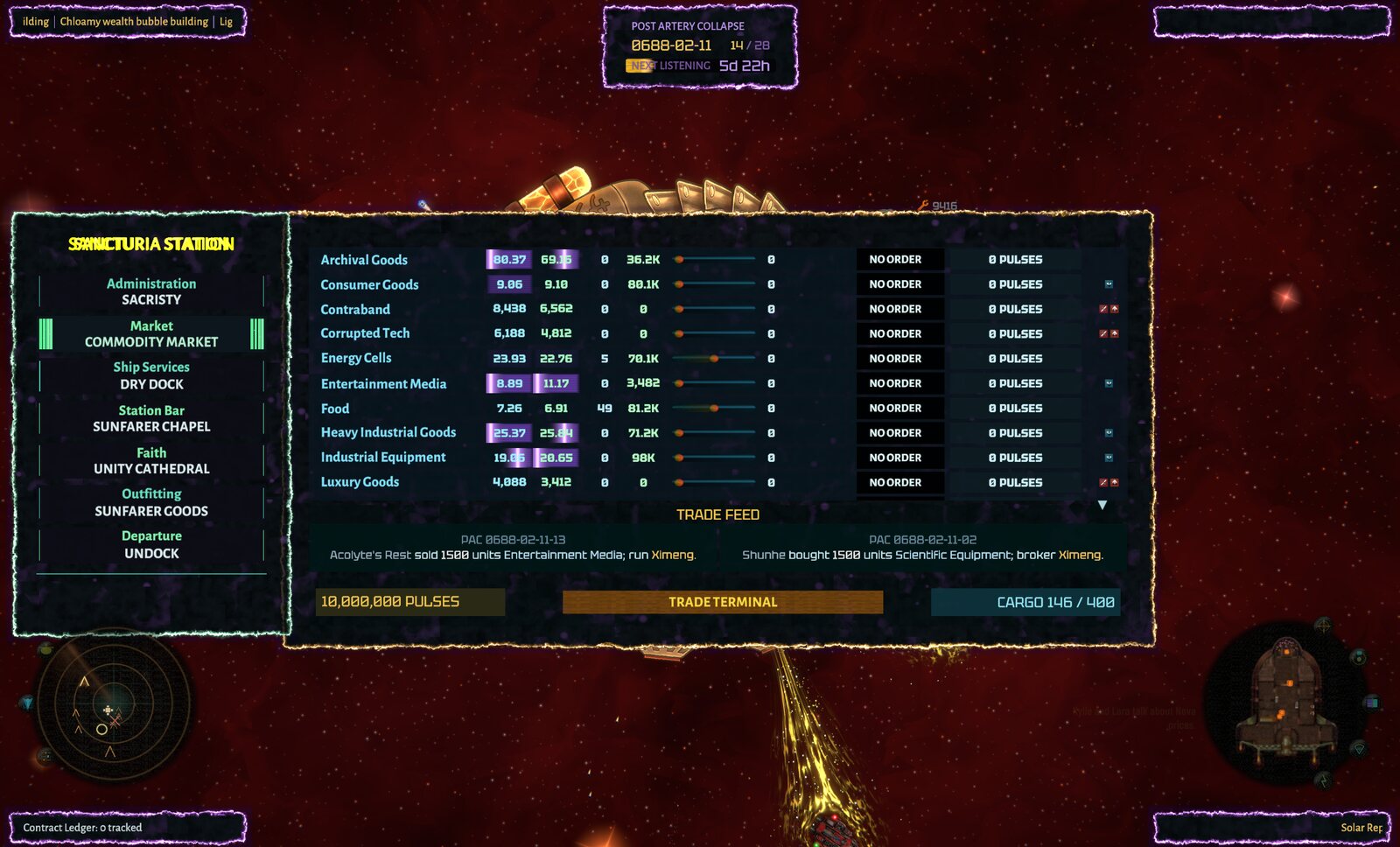
Prices follow supply, demand, and the memory of every recent trade. What costs twelve pulses at the refinery costs forty at the station running short. Production cycles shift with planetary conditions: morale, infrastructure decay, entropy surges. When a crisis hits, prices reshape which routes are worth flying.
Autonomous traders fly the same lanes you do. Merchant haulers optimizing margins, faction-aligned exporters prioritizing their own worlds, opportunists chasing shortage alerts, humanitarians running relief goods at a loss. When half the fleet arrives at Ximeng carrying refined materials, the quoted price has already adjusted before you dock.
What Sancturia consecrates, Chloamy auctions. Each faction draws legal lines around specific goods: narcotics, weapons, corrupted tech, contraband. Cross a border with the undeclared manifest and customs patrols interdict, inspect, confiscate. Tariffs stack. Smuggler routes exist for those willing to trade legality for margin.
Nova Maracaibo’s market occupies the system’s only neutral ground: a station carved from an old Artery node. The Spiral Bazaar rises in tiers, every faction trading openly under the Accords. Cargo from all seven worlds changes hands here. Pirates operate from Maracaibo’s margins too, hunting trade routes between stations, interdicting cargo haulers, and selling looted goods back through the very bazaars their victims were heading toward. Violence inside the station is bad for business. Outside, the lanes tell a different story.
Entropy blooms disrupt supply chains. A surge near Sancturia damages agricultural infrastructure; food prices spike, morale drops, and the cascading effects ripple outward through connected trade routes. The system generates delivery incentives: premium contracts for hauling relief goods where they’re needed most. Humanitarian traders accept losses to run those routes. Others wait for prices to peak. Your choice shapes which stations recover and which ones spiral.
Weapons Control
Combat is personal. Someone sits in the turret chair. Someone else keeps the engines running while the hull takes hits. The math is predictive targeting and intercept trajectories. The variable is the crew behind it.
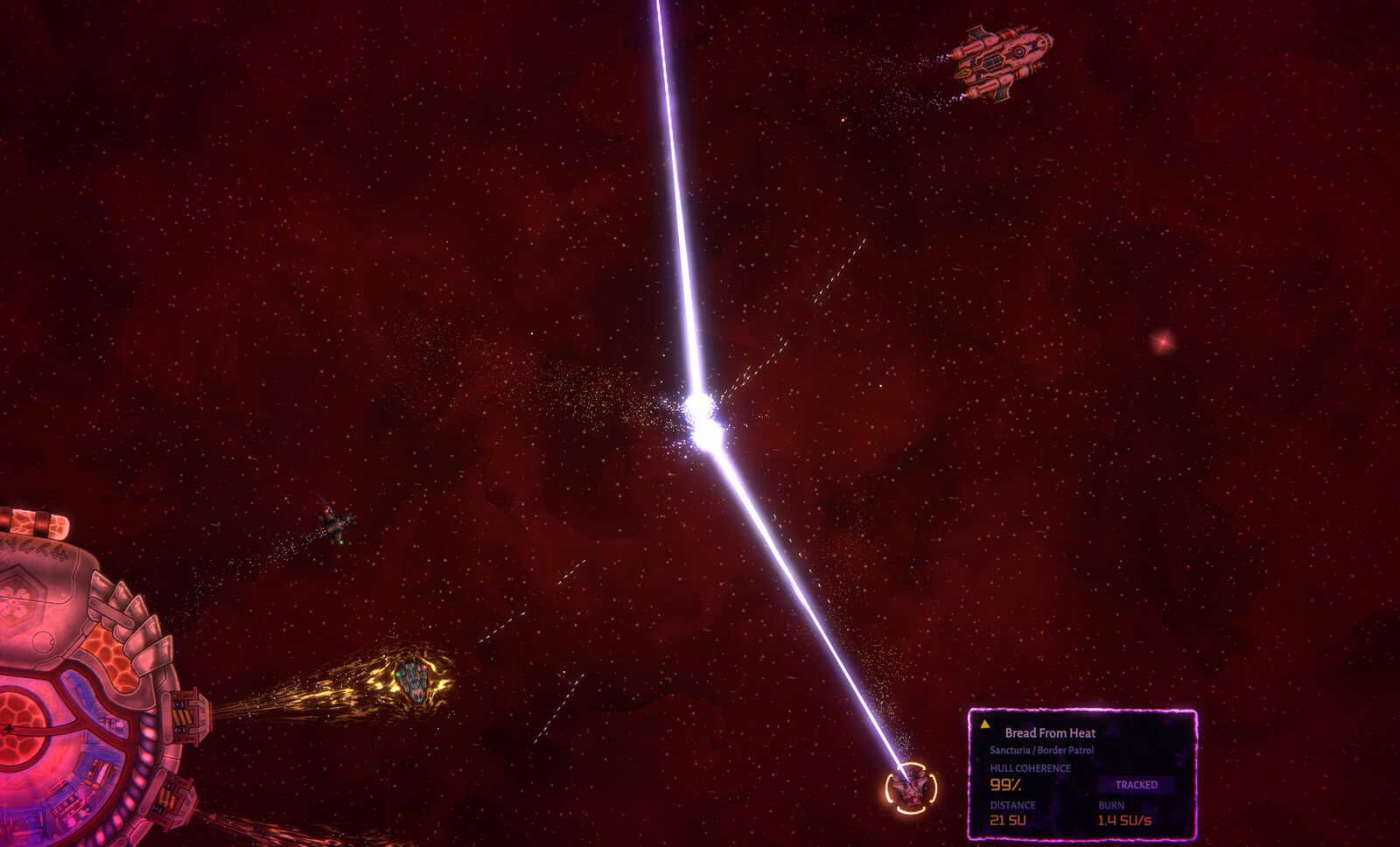
Turrets calculate intercept trajectories. But someone has to sit in the chair. A rested gunner reads the lead, compensates, lands the shot. An exhausted one watches rounds sail past the hull. The math is the same. The hands are different. Multiple turret stations let you mount a broadside, if you have the crew to staff them. Request direct control and every ready barrel follows your aim; if the seat is empty, the order waits while someone runs to take it.
Fourteen abilities span weapons, flight, engineering, sensors, and signature control. Crew dispatch, reactor health, local entropy, station power, cooldowns, and the person in the chair decide what is actually ready. A shield can save the hull. An Entropic Slip can put it somewhere else. A Dead Letter can leave the target carrying a problem that outlives the missile.
Ships in threshold space leave a wake. The interdiction array locks onto that signature, charges, and pulls the target back into real space. Freighters, patrol corvettes, pirates running with stolen cargo. The array takes time to charge, and the window is narrow. Miss it, and the target is through. The same applies to you: fly a trade lane near hostile space and listen for the charge whine that means someone else’s array has found your wake.
NPC ships don’t line up and take turns. They orbit at range, joust through your firing arcs, kite away from your turrets, break and evade when the hull gets thin, or adapt their approach mid-engagement when they realize what you’re doing. Every encounter reads differently.
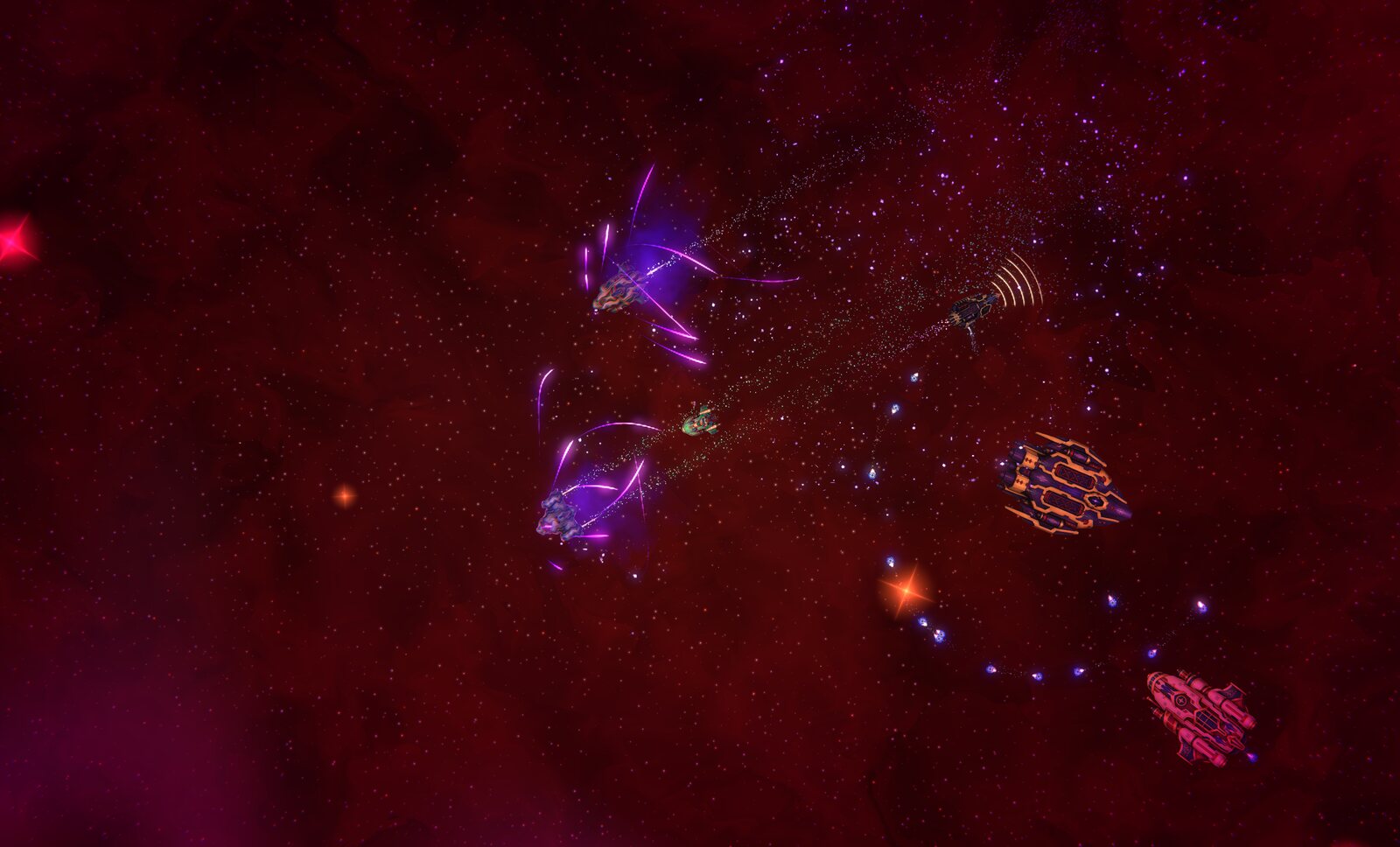
Tactical View pulls the camera back without pausing the battle. Ships become abstract glyphs inside a local fog-of-war field; velocity stems, health bars, turret ranges, projectiles, missiles, beams, storm hazards, docking links, and hostile contacts stay live. The overlay remembers ranges you have actually observed during the session. It does not grant knowledge you never earned.
Personnel
Recruited from ports across the system, each with their own skills and history. They become found family over time. The bunk they sleep in, the station they work, the meals they share. Every one of them is irreplaceable in ways the personnel file doesn’t capture.
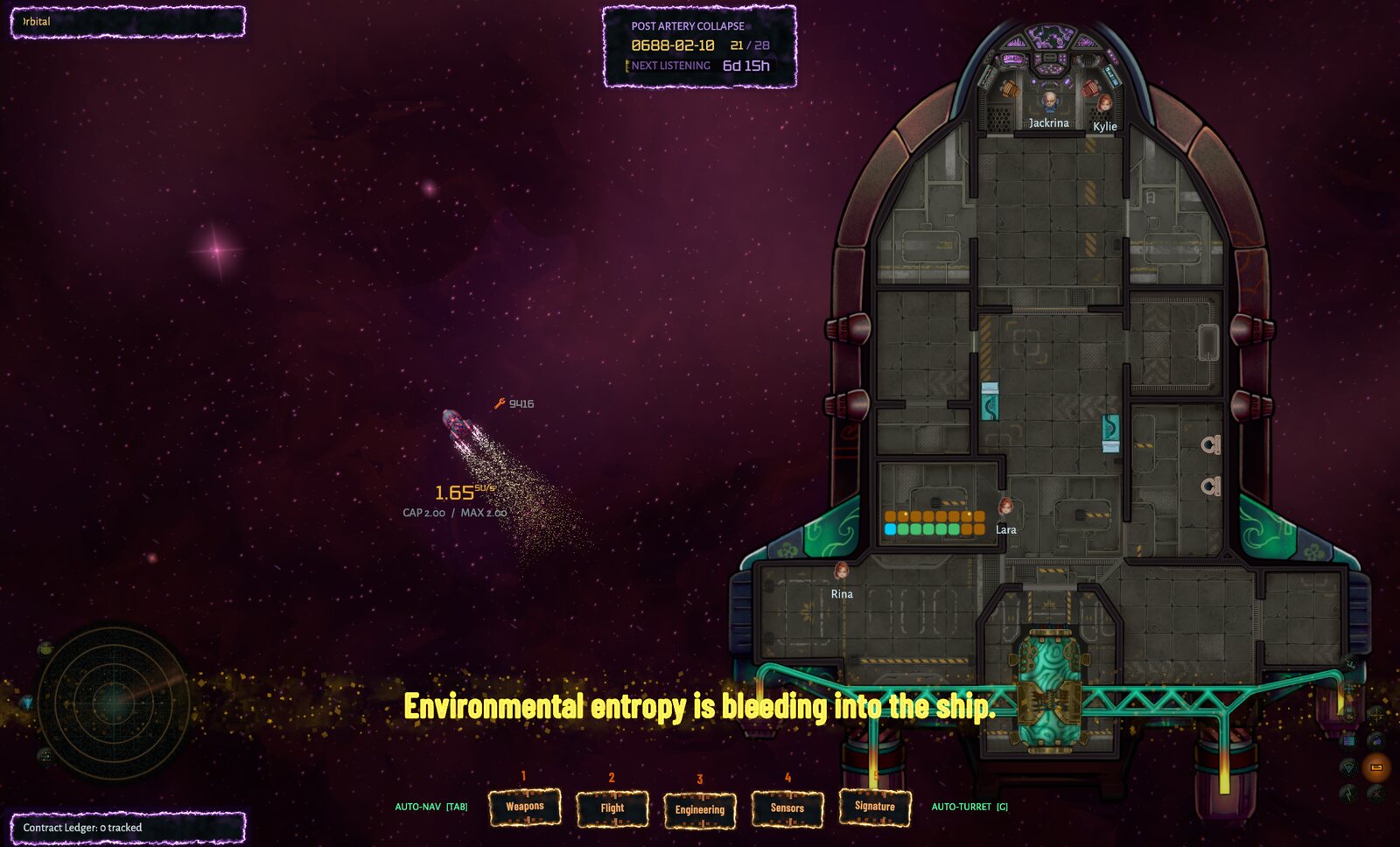
Health, fatigue, satiation, morale, sanity. Skills earned through use, from sunfaring to engineering. All of it feeds into Focus: the number that governs how well your crew does what you ask of them.
Focus scales everything that matters under pressure. Warp speed, turret accuracy, repair rates. A crew member who slept in a proper bunk and ate a hot meal at a table will outperform one running on ration bars and four hours of rest.
Push a crew member through back-to-back shifts and their focus erodes. Skip meals, shorten sleep cycles, postpone shore leave. The decline is gradual until it isn’t: fatigue stacks, morale drops, and the engineer who held the coupling stable at 90% focus can’t manage it at 40.
When a crew member dies, they stay dead. The skills they carried—years of accumulated competence at the turret, the nav console, the drive coupling—leave with them. Every loss narrows what your ship can do. Replacements wait at ports across the system, but the new face in the corridor isn’t the person who knew which valve to hit when the coupling whined at frequency three.
Set work priorities and your crew figures out the rest. They walk to stations, sit down, do the work, break for food, find a bunk when they’re exhausted. If the hull takes damage during a meal, the engineer puts down the fork and runs. You set the priorities. They make the judgment calls in between.
Astrography
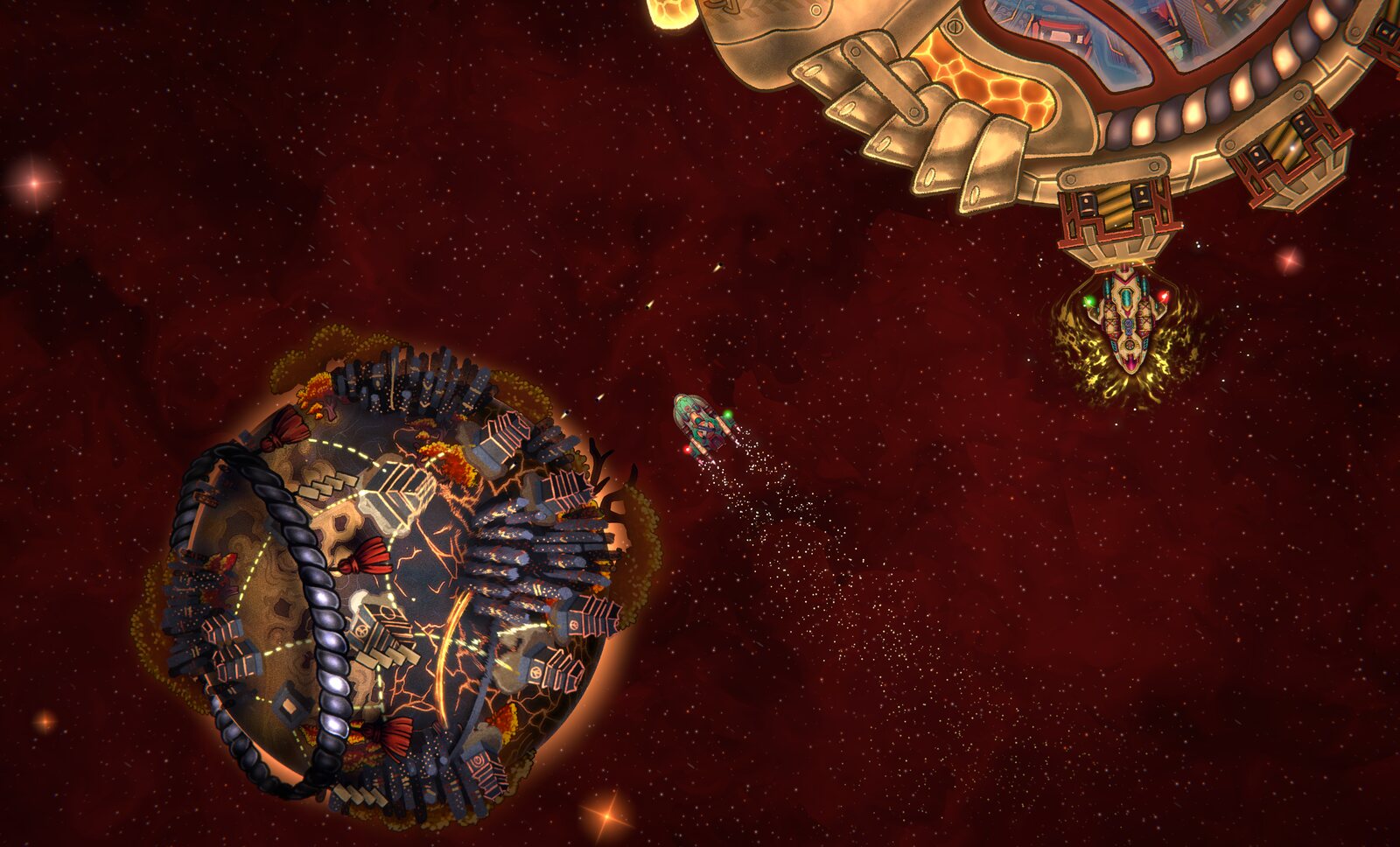
One star. Seven worlds. The Artery Stream once connected this system to thousands of others. When it fell silent, everything beyond the boundary stopped making sense. Seven factions survived, each with their own explanation for what happened and how to live with what followed. They built civilizations around those answers.
Select a faction
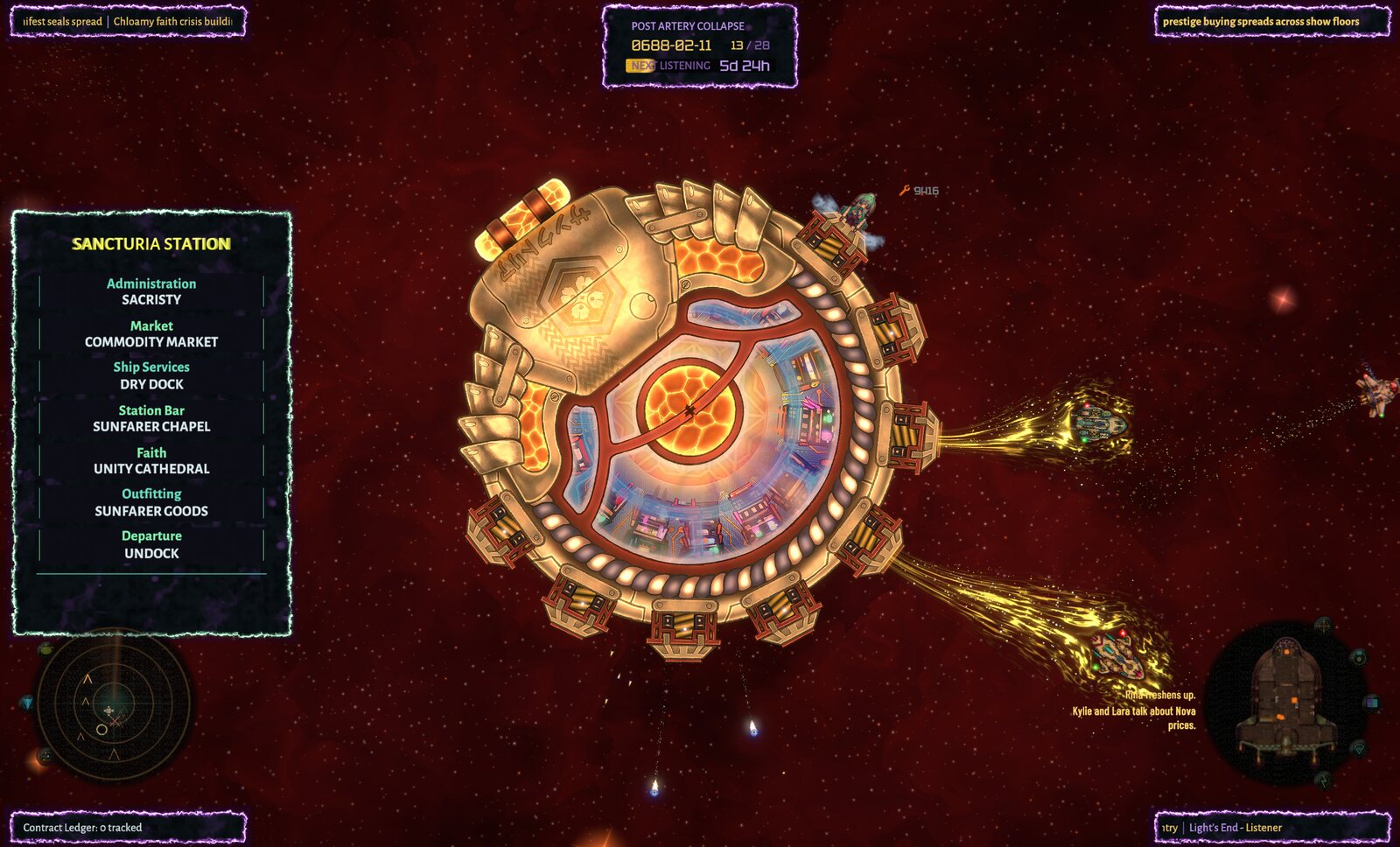
Every 7.3 days, entropy effects intensify across the system. Shadows deepen where no object casts them. Sensors log readings that contradict each other. Matter blurs at the edges of perception. Crews report hearing their own names in almost-familiar voices. Duration: eleven minutes to six hours. Ximeng suspends permit processing. Sancturia chants the Litany of Angles. Chloamy throws parties. Light’s End celebrates. Everyone else waits it out.
It is not only a change in the sky. Reactor output can sag or surge. Turrets turn without firing. Drones leave the hull and come back as rebuild orders. Cargo appears, vanishes, or becomes something else. Planetary incidents begin under the noise, and ordinary ships find reasons to attack each other. Some readings are false. The consequences are not.

Comms & Consequence
Every conversation carries weight. What you say at a Sancturian customs checkpoint shapes what gets offered at the next. Faction relationships shift with your choices, your trade history, your combat record. The system pays attention.
Dialogue presents in two forms: comms transmissions between ships, rendered as portrait and speaker identity; and narrative moments, rendered as centered text cards during significant story beats. Both pause the game. Both carry consequences.
Dialogue branches based on what you’ve done, who you’ve traded with, what you’re carrying. A captain known for running medical supplies to Sancturia during a crisis gets a different reception than one flagged for smuggling contraband through Ximeng customs.
Each faction tracks its relationship with you independently. Reputation opens doors: better contracts, access to restricted goods, priority docking. A captain who interdicts Sancturian purifier ships finds fewer warm welcomes at their furnace-temples.
System news arrives as sourced reports, not omniscient narration. Incidents build, escalate, ease, and resolve. Opportunities open, fill, or pass while the public digest keeps moving whether you intervene or not.
Your ship keeps a durable record of combat, cargo, contracts, enforcement, energy failures, salvage outcomes, and the stories that become larger than the people who lived them.
Bounties follow attribution. Cargo you deliver appears on station shelves. Planetary incidents alter prices, production, enforcement, entropy pressure, and the contracts people are willing to offer. Salvage survivors remember whether you carried them home. SNOAS Airwaves tells the public version; the Chronicle keeps the version your ship lived through. Your reputation reaches the next port before you do.
Audio
Between worlds, the ship finds its own quiet: the reactor’s hum, air cycling through vents, a kettle heating in the mess. The soundtrack lives inside that quiet. Strings surface during the long drifts between ports. Percussion builds when contacts appear on sensors. And during threshold passages, something else entirely—the sound of space folding, and whatever resonates through the hull while it does.
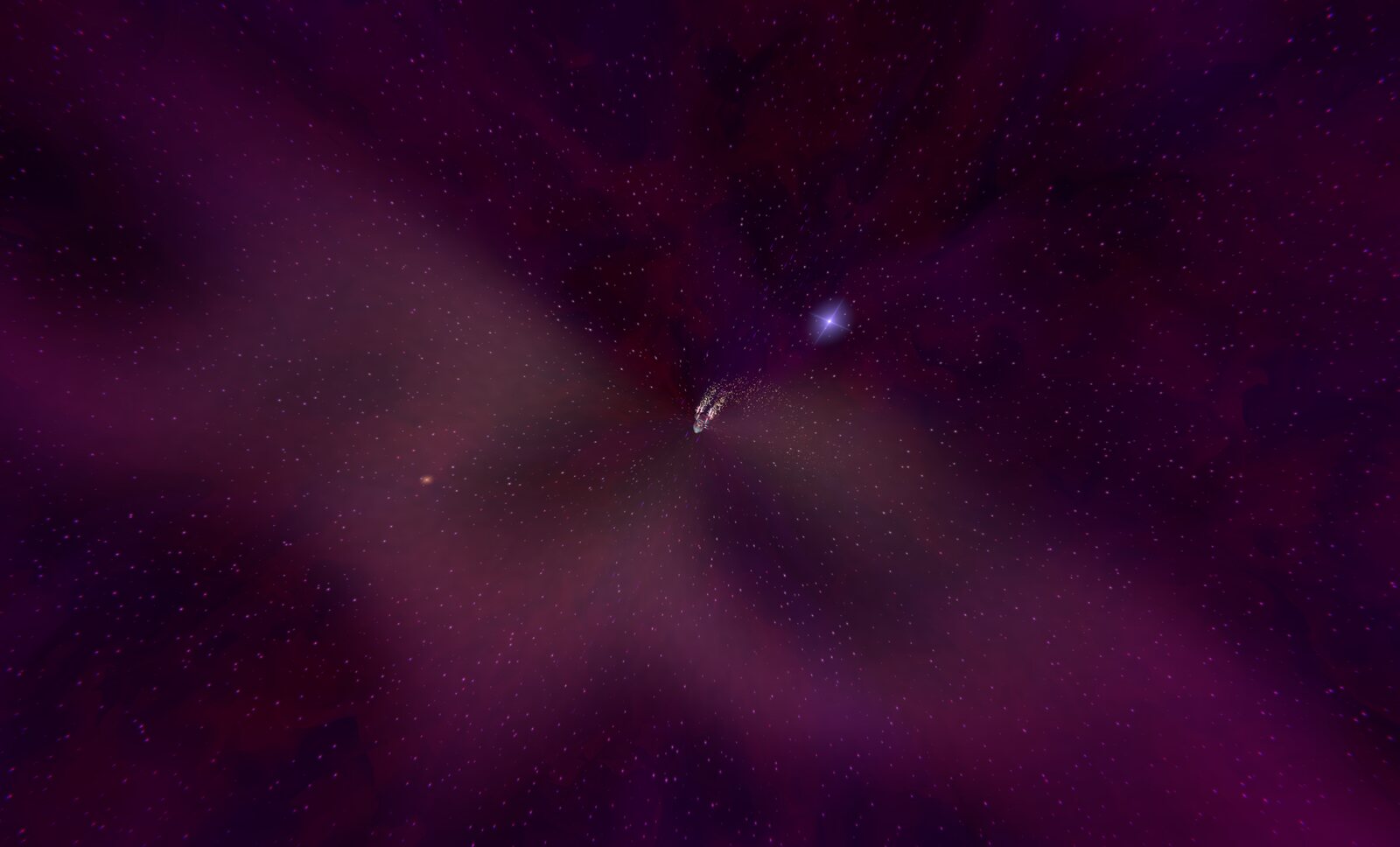
Every compartment carries its own ambient layer, proximity-gated and mixed in real time. Walk past engineering and hear the coupling lattice thrum. Pass through the mess and catch the low murmur of crew between shifts. The cargo hold echoes differently full than empty. These layers stack, overlap, and thin out as you move through the ship. The music responds to state: docked and loading, drifting between worlds, locked in combat, or passing through the fold where the drive’s voice drowns everything else out.
All music composed in-house. Four pieces from the game.
The long passage between ports. Instruments trading phrases with silence, unhurried.
Contacts on sensors. The moment between identification and engagement.
Docked. Cargo shifting in the hold. Shore leave for whoever earned it. The station’s low hum beneath everything.
Every 7.3 days, the system holds its breath. The ship grows quiet in ways the instruments can’t account for.